Popular Posts

Showing posts with label World Health Organisation. Show all posts

Saturday, April 4, 2020

WHO - Be Aware of Scammers?


Yes, the World Health Organisation  (WHO) is sending out a scam alert for the following scammers asking for private details on emails or Whatsapp. It is shocking to hear that this is happening -  help WHO shut these cyberspace people down immediately by reading the following details:


Beware of criminals pretending to be WHO

Hackers and cyber scammers are taking advantage of the coronavirus disease
(COVID-19) pandemic by sending fraudulent email and WhatsApp messages
that attempt to trick you into clicking on malicious links or opening attachments.
These actions can reveal your user name and password, which can be used to
steal money or sensitive information.
If you are contacted by a person or organization that appears to be WHO, verify
their authenticity before responding.

The World Health Organization will:
  • never ask for your username or password to access safety information
  • never email attachments you didn’t ask for
  • never ask you to visit a link outside of www.who.int 
  • never charge money to apply for a job, register for a conference, or reserve a hotel
  • never conduct lotteries or offer prizes, grants, certificates or funding through email.

The only call for donations WHO has issued is the COVID-19 Solidarity Response
Fund, which is linked to below.  Any other appeal for funding or donations that
appears to be from WHO is a scam.  

Beware that criminals use email, websites, phone calls, text messages, and even fax messages for their scams.
You can verify if communication is legit by contacting WHO directly.


Phishing: malicious emails and messages appearing to be from WHO
WHO is aware of suspicious email messages attempting to take advantage of
the COVID-19 emergency. This fraudulent action is called phishing.

These “Phishing” emails appear to be from WHO, and will ask you to:
  • give sensitive information, such as usernames or passwords
  • click a malicious link
  • open a malicious attachment.

Using this method, criminals can install malware or steal sensitive information.
How to prevent phishing:
  1. Check their email address.

    Make sure the sender has an email address such as ‘person@who.int’
    If there is anything other than ‘who.int’ after the ‘@’ symbol, this sender
  2. is not from WHO. 

  3. For example, WHO does not send email from addresses ending in ‘@who.com’ , ‘@who.org’ or ‘@who-safety.org’.
  4. Check the link before you click.  

    Make sure the link starts with ‘https://www.who.int’.  Better still, navigate to the 
  5. WHO website directly, by typing ‘https://www.who.int’ into your browser.
  6. Be careful when providing personal information. 

    Always consider why someone wants your information and if it is appropriate. 
  7. There is no reason someone would need your username & password to access 
  8. public information.
  9. Do not rush or feel under pressure. 

  10. Cybercriminals use emergencies such as the coronavirus disease (COVID-19) 
  11. pandemic to get people to make decisions quickly. Always take time to think 
  12. about a request for your personal information, and whether the request is 
  13. appropriate.
  14. If you gave sensitive information, don’t panic.  

    If you believe you have given data such as your username or passwords to cybercriminals, immediately change your credentials on each site where you 
  15. have used them.
  16. If you see a scam, report it.  

    If you see a scam, tell us about it.  

Sunday, March 15, 2020

Community Information On Coronavirus COVID-19......

I have researched  some community details on the Coronavirus COVID-19, as the pandemic has reached 5,720 deaths  and 152,428 confirmed cases, with 141 cases affected.  Click here for details from World Health Organization


There is a tipping point before it kills Click here for details

All details regarding the Corona virus Covid-19 from the World Health Organization


Within Australia, 

Website: 
Click here for Australian Government Health Department

Coronavirus Health Information line:
:1800 020 080

Call this line if you are seeking information on coronavirus (COVID-19). The line operates 24 hours a day, seven days a week.

Healthdirect Hotline:

1800 022 222

website: https://www.healthdirect.gov.au/

Call this number to speak to a registered nurse about your health concerns. The hotline is open 24 hours a day, 7 days a week.

Click here for previous post


Thursday, March 12, 2020

Who's Holding The Cure For The Coronavirus (COVID-19)?

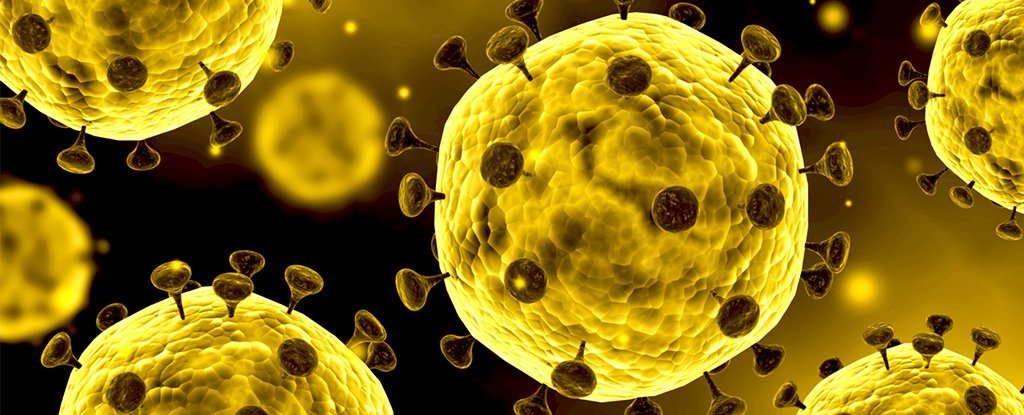
main article image
Interesting perspective way to look at the Corona Virus from Alex Downer former Australian Foreign Minister on Twitter:

"So far this year 4,000 people have died from covid19, 92,000 from flu, 320,000 from HIV/AIDS, 256,000 from road accidents. Perspective!"

From Science alert the Corona Virus has been around since the early 1960's. So why the big scar? Is this politically motivated, not from Leaders around the world, from people or organisations that influence any governments? That is my thought.

I understand that deaths are increasing per day around the world and I not saying we shouldn't prevent these deaths. Toilet papers are been bought in huge numbers, as well as serviettes, hand sanitizes, pasta and rice have been cleaned off supermarket shelves.  Which is total stupidity going on. Selfish people out there looking after themselves packaging these items and sending them to overseas, not caring about all of us individual Australians

This makes me this me think that someone wants these every day living items go sky-rocketing in sales. So is this really a senseless profiteering racket that is happening under our eyes. Who's got the cure for this virus? Shall we ask or who is hiding it from us now?

Has a country or someone got the cure or antivirus and is holding back until they release this and make multi billion dollars on it?According to Australian Government Department of Health, there is no current cure yet.

"Coronavirus (COVID-19) is a respiratory illness caused by a new virus. Symptoms range from a mild cough to pneumonia. Some people recover easily, others may get very sick very quickly. There is evidence that it spreads from person to person. Good hygiene can prevent infection."


*What Is a Coronavirus?

Coronaviruses are a family of viruses known for containing strains that cause potentially deadly diseases in mammals and birds. In humans they're typically spread via airborne droplets of fluid produced by infected individuals.
Some rare but notable strains, including SARS-CoV-2 (responsible for COVID-19), and those responsible for severe acute respiratory syndrome (SARS) and Middle East respiratory syndrome (MERS), can cause death in humans.
First described in detail in the 1960s, the coronavirus gets its name from a distinctive corona or 'crown' of sugary-proteins that projects from the envelope surrounding the particle. Encoding the virus's make-up is the longest genome of any RNA-based virus – a single strand of nucleic acid roughly 26,000 to 32,000 bases long. 
There are four known genuses in the family, named AlphacoronavirusBetacoronavirusGammacoronavirus, and Deltacoronavirus. The first two only infect mammals, including bats, pigs, cats, and humans. Gammacoronavirus mostly infects birds such as poultry, while Deltacoronavirus can infect both birds and mammals.

What are the symptoms of a coronavirus?

Coronaviruses can give rise to a variety of symptoms in different animals. While some strains cause diarrhoea in pigs and in turkeys, most of the time infections can be compared to a bad cold, causing mild to moderate upper respiratory problems such as a runny nose and sore throat.
There are a handful of lethal exceptions, which have had a devastating impact on livestock and human health around the globe.

COVID-19 (SARS-CoV-2)

SARS-CoV-2 was first identified in the Chinese city of Wuhan in 2019. At the time of writing, numbers of infected are still on the rise, with a mortality rate of around 1 percent. 
Snakes were originally suspected as a potential source for the outbreak, though other experts have deemed this unlikely and proposed bats instead. As of February 2020, the search for the animal origin of COVID-19 is ongoing.

Severe acute respiratory syndrome (SARS-CoV)

SARS was first recognised as a distinct strain of coronavirus in 2003. The source of the virus has never been clear, though the first human infections can be traced back to the Chinese province of Guangdong in 2002.
The virus then became a pandemic, causing more than 8,000 infections of an influenza-like disease in 26 countries with close to 800 deaths.

Middle East respiratory syndrome (MERS-CoV)

MERS was first identified in Saudi Arabia in 2012 in people displaying symptoms of fever, cough, shortness of breath and occasionally gastrointestinal problems such as diarrhoea. An animal source for the virus has never been officially confirmed, though evidence points to dromedary camels as a potential reservoir of infection.
The World Health Organisation has identified around 2,500 cases of infection in 27 countries since initial outbreaks, resulting in nearly 860 deaths.

*Sourced from sciencealert.com

Click here for previous post

Fake Purchase Callback Scams - ACCC Scamwatch

  View this email in your browser   Scam alert  Fake purchase callback scams What's happening Scammers are sending fake messages that sa...